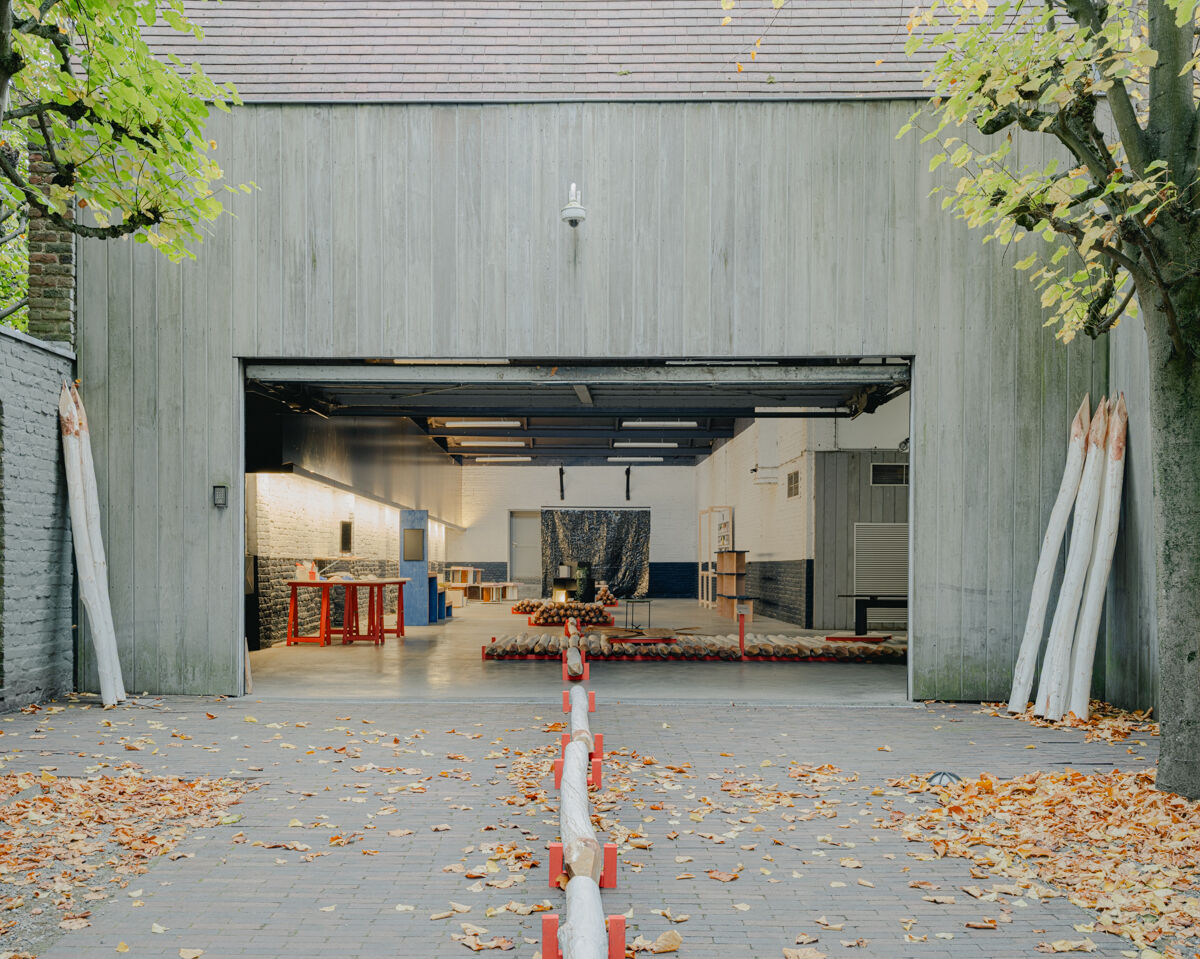
BBoBB - “Echoes of the earth”
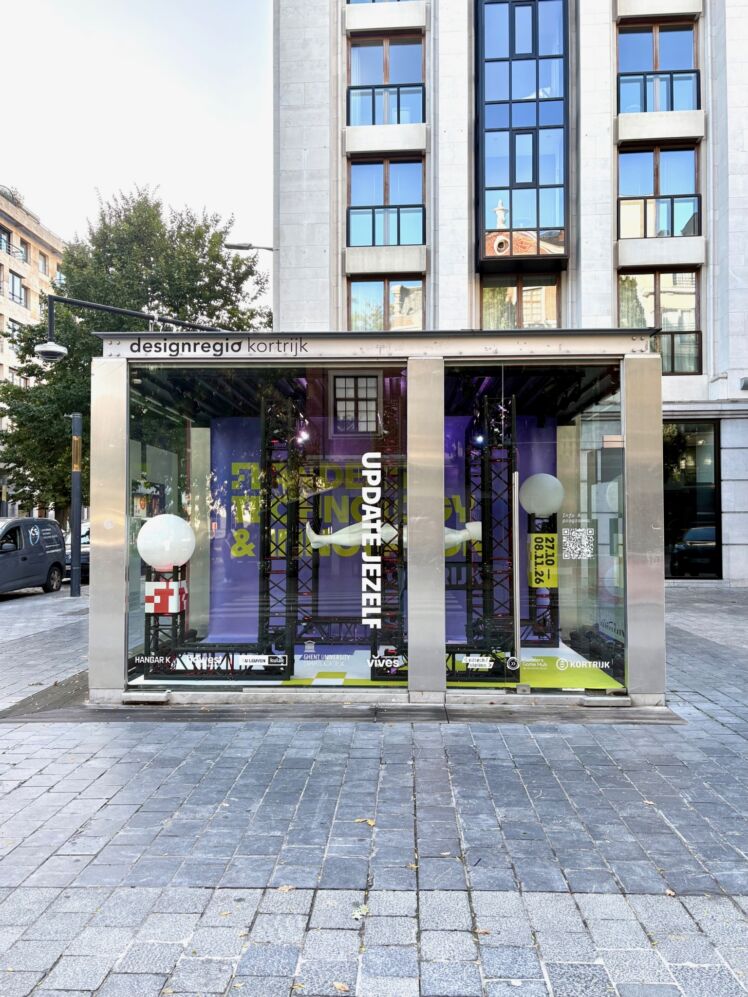
At WONDER Creativity Festival, the exhibition BBoBB - “Echoes of the earth” presents bio-based and circular innovations and design at Koramic House.
If you look closely, you will see that nature is a silent magician. It has been weaving, shaping, transforming and reusing, without waste, for millions of centuries.
In the Echoes of the Earth exhibition, creators and companies show this trail. Imagine: a world in which we build and create with what grows in nature: chairs made from fungal threads, packaging made from algae, reinforced with flax. Everything made with living materials that breathe, decay and are reborn.
This exhibition is about bio-based and regenerative design: designing with materials of biological origin that are not only sustainable for the environment but also contribute to its restoration.
The future is bio-based!
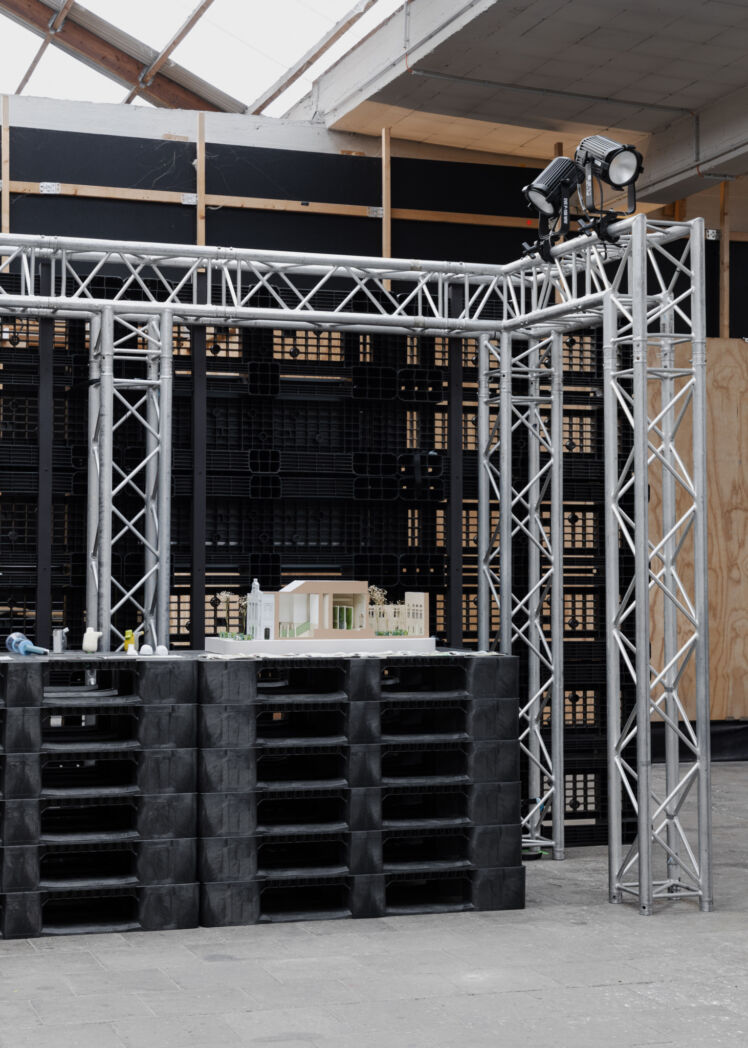
This exhibition is organised as part of the international project Building Based on Biobased (BOBB) in collaboration with UGent Campus Kortrijk, and with the support of Interreg North Sea Region and the Province of West Flanders. Exhibition design by Tuur Demaegdt and HOP architects.

Participating designers
Andrei Silviu Nitu
Hempcrete consists of hemp wood, lime and water. This bio-based material regulates temperature, dampens sound and neutralises odours.
The cat house and perfume packaging are prototypes with which designer Andrei-Silviu Nitu explored the possibilities of the material. It turns out that hempcrete can also be used in the design of details.
For the perfume packaging, he experimented with the use of hempcrete in extremely complex shapes. Some parts are barely 8 millimetres thick, but still prove to be fully functional.
Anouk Verstuyft
Anouk Verstuyft presents three pieces from the series ‘Fungal Functions’: a series of objects in which mycelium was experimented with in different ways. After all, the exact potential of this material is still being researched and developed. This collection contributes to this quest and development.
The stool is finished with a mycelium composite that converts hemp waste into a regenerative material with strong mechanical properties.
The cabinet showcases a self-colouring material obtained from a fungus that produces its own pigments.
The lamp contains a mycelium material that was cultivated in textile wastewater. During the growth process, the fungi are able to break down the textile dye present, thereby purifying the wastewater at the same time.
Annah Ololade Sangosanya
The leather used in this jacket is made entirely from mycelium and is therefore 100% bio-based. It offers a biodegradable alternative to synthetic leather. The colour gradient is completely natural. No dyes have been added.
The jacket is composed of modular pieces that are attached to each other by rivets. This makes it easy to take the jacket apart again.
Andy Cartier
What do objects look like when nature drives the design process? You could say that both the surfboard and the chair were not “manufactured” but “grown”.
The surfboard is made from mycelium, combined with hemp fibres and a natural resin coating. The sofa was created by combining mycelium with local agricultural waste.
Both objects were made (or “grown”) by the Dutch company Spore. Spore researches and develops applications using mushrooms and mycelium. Makers and designers of bio-based products can find the necessary materials in Spore's webshop, but they can also visit the lab near The Hague for support in creating objects and for experimentation and prototyping.
The experimental surfboard was developed by Andy Cartier as part of an R&D project. The surfboard is now being produced and commercialised by KOZ, a start-up that wants to use regenerative materials within surf culture.
Saartje Allosserie in collaboration with Remko Degrande
This light object is made from unglazed porcelain, which means it is free of chemicals, can be fired at a lower temperature and is easy to recycle.
Unglazed porcelain is a stable, colourfast and durable material, suitable for outdoor applications.
Together with local ceramists and partners, the production process is now being further refined, with the aim of creating a scalable, locally produced light object with a minimal ecological footprint.
Amanda Brezell
Fennigan's Farms, the work of social and biobased designer Amanda Brezell, is one of many bottom-up initiatives breathing new life into Detroit.
After completing her studies, Amanda Brezell returned to her hometown of Detroit and started an urban farm. Using African and indigenous agricultural traditions, she purified contaminated soil and made vacant lots usable again for the neighbourhood and nature.
The harvest of herbs and vegetables is shared free of charge with local residents, while flowers are sold at events and pop-ups. Residual waste from the crops is processed into innovative materials such as bioplastics, biocomposites and the sheet material you see here.
At NewLab Detroit, these experiments are being further developed into prototypes.
Kurt Van Overbeke & Pia Vandeputte & Xavier Coenen
From nature to utility and back again: this stool made from mycelium mixed with hemp and flour is primarily intended for the events sector.
The stools germinate and grow in the mould within a few weeks to become versatile seating furniture. After use, e.g. after the festival season, they return to the earth from which they originated.
As if they had never been there.
Jeremy Leung
With his musical and technical background, Jeremy Leung focuses primarily on experience design: creating valuable and atmospheric experiences.
When organising small-scale live performances in Utrecht, he sought a way to illuminate the space in an atmospheric manner. He began experimenting with drums, which eventually evolved into his Staples collection: a series of portable light fixtures, 3D-printed with bioplastics.
With the Peel table lamp, Jeremy Leung refers to how his grandmother used to peel fruit for her grandchildren after lunch.
Indré Mikucké
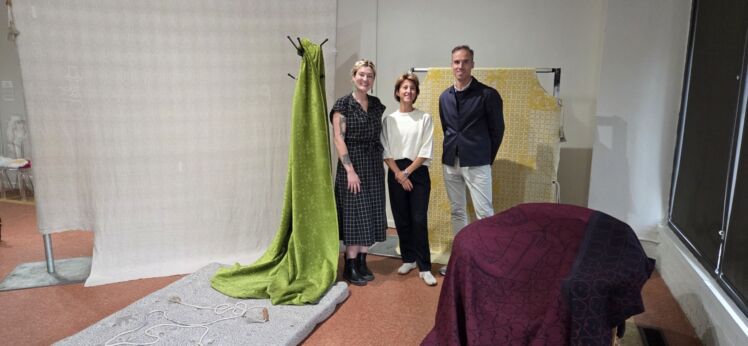
In collaboration with Kauno Kolegija Higher Education Institute (Kaunas, Lithuania), Indré created this algae-based curtain especially for this exhibition.
Through a natural process, algae were converted into a material that can be processed with a cutting machine.
Regenerative design is central to Indré's work. With her new products, she aims not to burden the environment, but to restore or even improve nature.
Dries Laperre & Laura Willems (Surplace)
With Vlastic, the designers developed a new biobased material based on flax shives, a residual stream from flax processing that amounts to 70,000 tonnes annually in Belgium!
No binding agent is used in the production of Vlastic. The result is a new biobased, open and lightweight material that is a sustainable alternative to foamed plastics such as PUR and EPS, commonly known as Styrofoam.
Rooted in our rainy landscapes, flax has brought prosperity to the region throughout history. Vlastic builds on this heritage. More than just a new biobased material born from a waste stream, Vlastic is a bridge between the past and the future.
Michiel Wierinck in collaboration with Koba Quisquater
These urns are handcrafted in Belgium in collaboration with a local basket maker and are sold via the website www.naturnus-houten-urnen.com.
The urns are made from recycled cotton. Inside is a paper ash bag and they are closed at the bottom with a wooden lid.
By using only natural materials, these urns are completely biodegradable and can be used in natural burial grounds. Once the urn is buried in the ground, it gradually breaks down and the ashes are returned to the earth.
Masterstudenten UGent campus Kortrijk Productontwerp (2024-2025)
The students were tasked with developing birdhouses using bio-based materials found in the birds' natural habitat.
The assignment resulted in birdhouses that not only provide a safe home for birds, but also demonstrate how bio-based design and material innovation can go hand in hand to support biodiversity and strengthen the connection with nature.
The students found inspiration for their designs in the Ghent University Biocomposites Database, a unique source of knowledge and examples of bio-based materials.
Arno Hoogland voor Unilin Panels en BLOK Plaatmateriaal
The functional and aesthetic possibilities of the new Fibralux Biobased MDF board, developed by Unilin, are showcased here in a unique way.
Arno Hoogland presented this futuristic temple last spring at the Salone del Mobile in Milan. The installation is constructed from sculptural blocks that have been machined using a CNC machine.
With Fibralux Biobased, Unilin is bringing a world first to the market: a 100% bio-based MDF board. The wood and wood waste for the boards come from residual flows from the wood industry, thinning wood from sustainable forest management and wood from roadside maintenance. Finally, the natural adhesive is unique: a vegetable resin mix based on sunflower and rapeseed kernels.
Gabriela Farias for Spore
These panels are manufactured and distributed by the Dutch company Spore and were designed by lab manager and designer Gabriela Farias.
The mycelium for this product grows on hemp and flax. Wool is then integrated, which gives the biocomposite extra strength and also makes it easier to remove the mature object from the mould. The wool used is a residual material. Every year, 1 million kg of wool is burned or thrown away in the Netherlands.
Spore researches and develops applications with mushrooms and mycelium. Makers and designers of bio-based products can find the necessary materials in Spore's webshop, but they can also visit the lab near The Hague for support in creating objects and for experimentation and prototyping.
Mogu
The Italian company Mogu is a pioneer in the field of bio-based products for interiors and architecture. Driven by a strong desire for innovation, Mogu introduced the world's first acoustic wall panels made from mycelium in 2018.
These panels are not created through traditional manufacturing, but through a unique process of “growth”: the mycelium develops on waste streams from the agricultural and textile industries. The result is completely circular: waste is not only reduced, but actually converted into a valuable raw material.
Mogu's panels combine aesthetic refinement with ecological progress and demonstrate that interior products can be both elegant and regenerative. They have a soft texture, a distinctive character and are completely circular and sustainable. In Belgium, the products are distributed by Concep'trade.
Nienke Hoogvliet and Tim Jongerius for Releaf
The From plants to plastic collection was developed in 2024 for Dutch Design Week on behalf of the Dutch company Avantium.
For the woven seat of this bench, the designers used releaf®, a plant-based polymer developed by Avantium from natural raw materials such as corn and wheat.
With their collection, the designers demonstrate the versatility of bio-based plastics. From packaging to textiles: with releaf®, everyday products can be part of a circular and climate-friendly future.
Erjen Gregoire voor ONBETAALBAAR
Recycling, upcycling, reuse and exploring circular applications are ONBETAALBAAR (PRICELESS). This design and maker's studio created a number of pieces of furniture in collaboration with Orineo, the manufacturer of OriBond.
OriBond is a 100% plant-based binder made from linseed oil and by-products from the food industry.
For the stool, OriBond was mixed with cranberries as a filler and, in the split tree trunk, with lavender distiller's grains (a residual stream produced in southern France during the processing of lavender).
Experiments are also exploring mixing with mineral fillers such as eggshells, glass and marble powder.




Sébastien Hylebos
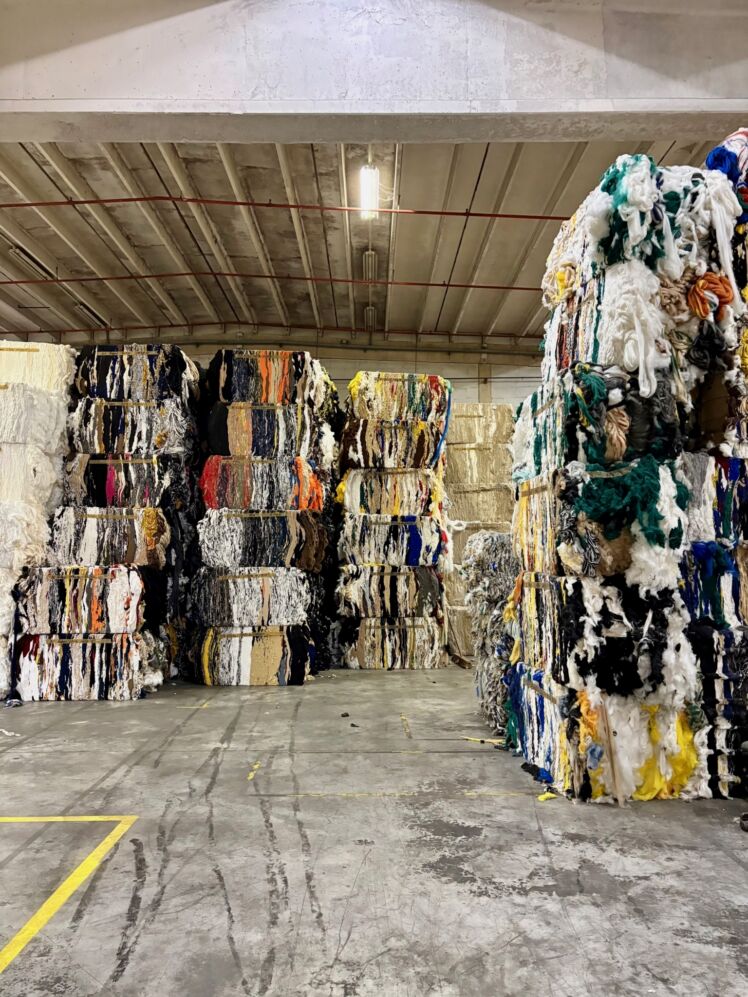
Sébastien is responsible for circular economy and textile projects in collaboration with companies and designers. He is also responsible for providing general support to the organisation.