WE ARE THE NEXT GENERATION EXPO at Design Fest Ghent
On Saturday 3 October, the Design Museum Gent reopens! Under the banner of Design Fest Gent, they’re taking the city by storm with a host of surprising exhibitions, installations and events.
At Broei Gent, you can discover our exhibition WE ARE THE NEXT GENERATION, featuring 20 groundbreaking final-year projects by a new generation of designers.
A new generation of designers.
Curious. Critical. Experimental.
The new generation of Belgian design talents looks beyond what’s obvious. They question the way we live and produce, they examine and experiment. This creates space to explore new possibilities.
What connects them? Looking for what’s still possible in what’s already there. These young designers rethink materials, techniques, and everyday objects. What strikes is the combination of imagination and engagement in their works. They constantly shift between research and practice, between technology and craft, between the personal and the social.
From tactile objects and new product ideas, to spatial installations and graphic research: the selected projects show us a design field that is constantly evolving. Not one clear style, not one fixed formula, but a common curiosity for what design can be today and could mean tomorrow.
One concept, two expositions
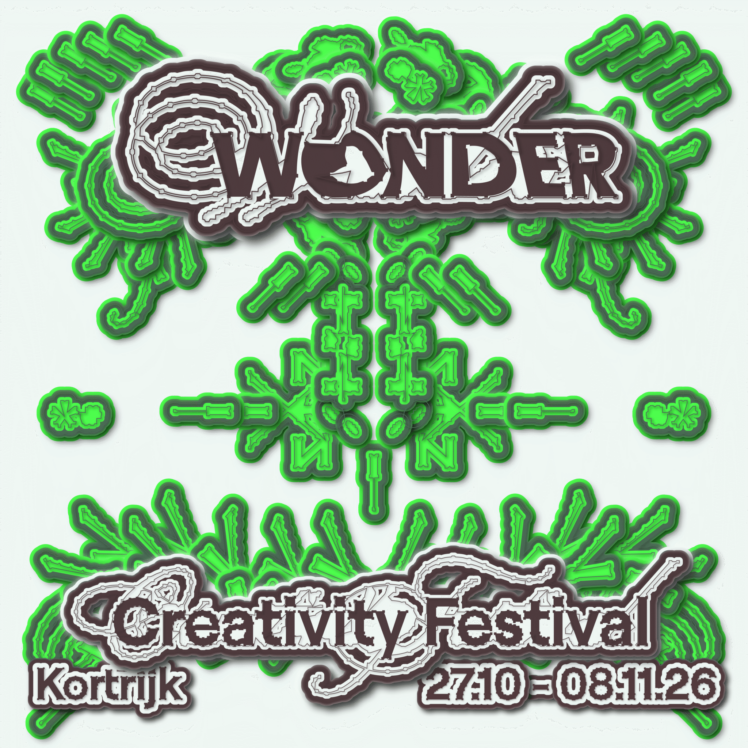
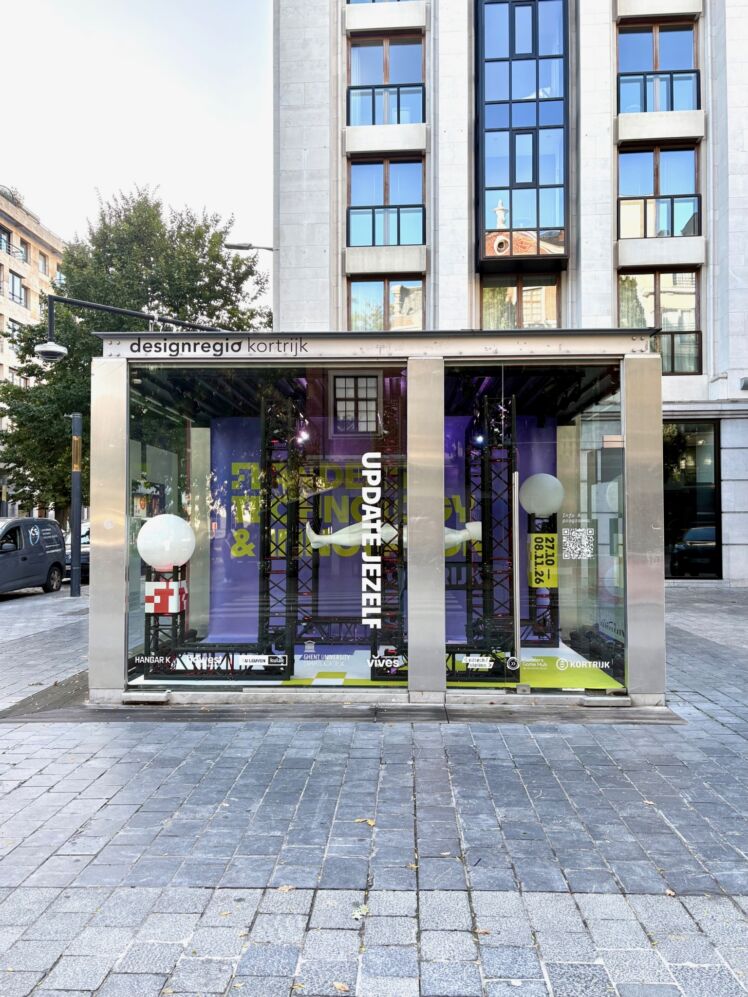
This year you’ll discover the new generation of designers from creative design education, selected by a professional jury, in two locations and at two moments. A selection of the works is shown in Ghent during the festive reopening of the Design Museum. Another selection follows in Kortrijk during the WONDER festival. Two separate exhibitions, one shared concept.
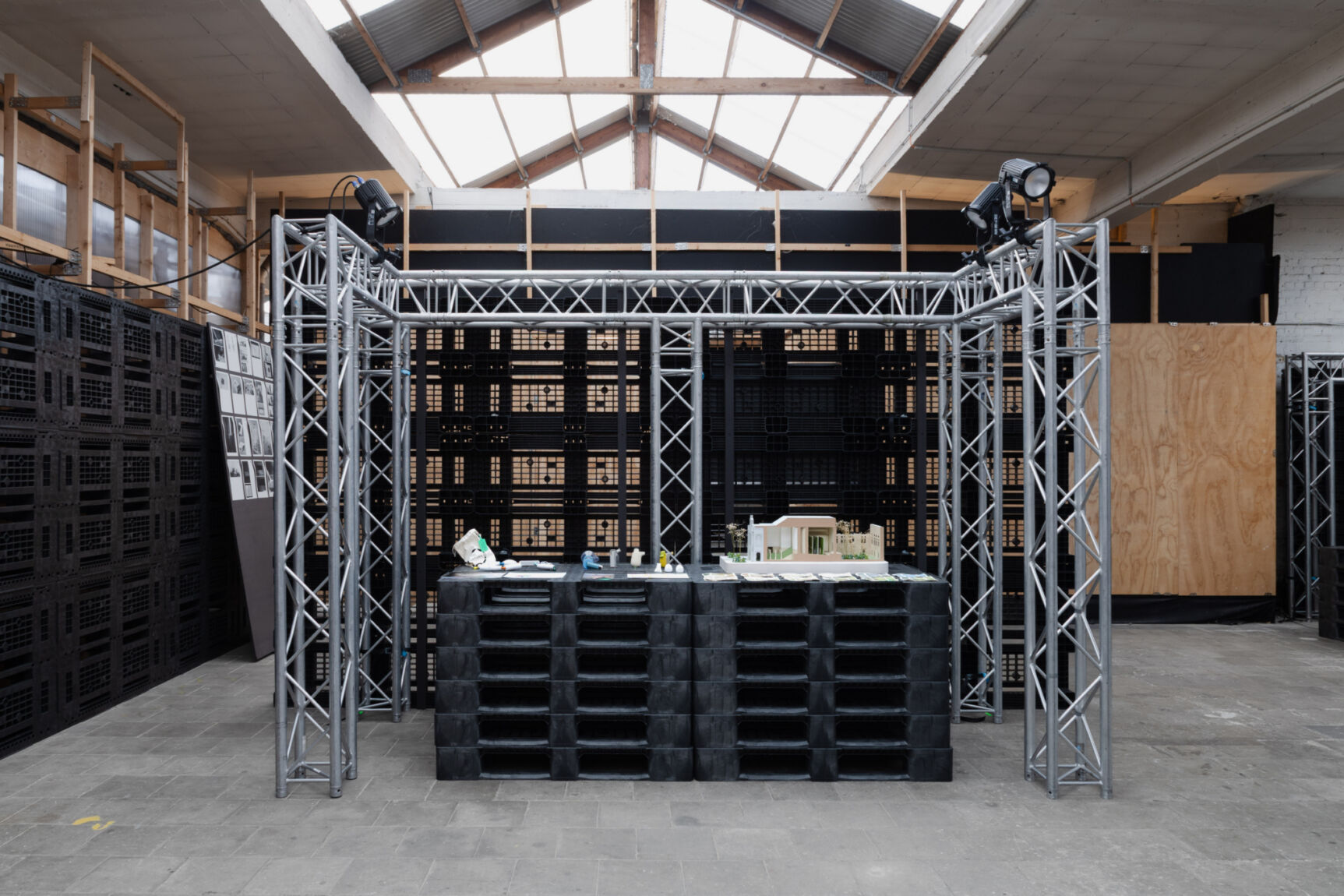
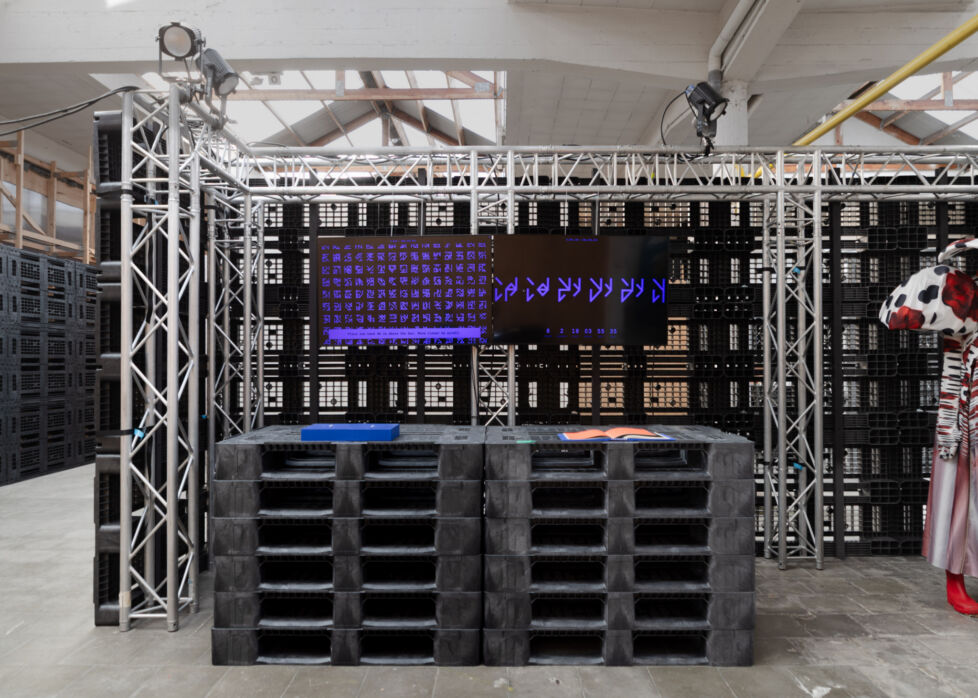
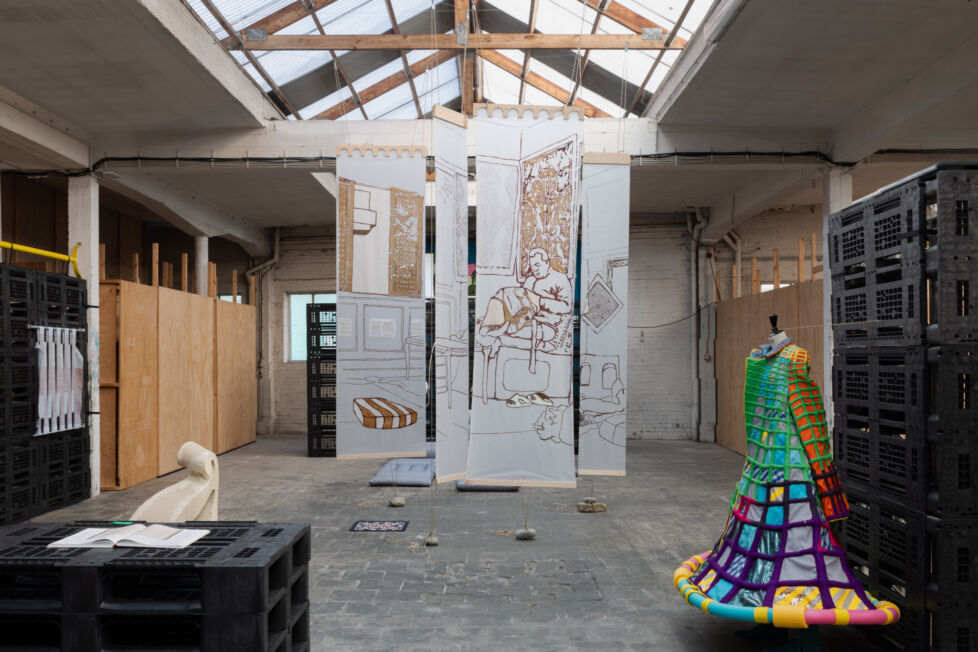
In a scenography by 22222 (Karel Burssens), each exhibition becomes a spatial experience. Plastic
pallets by Plastibac and trusses form a sculptural landscape of walls and passageways. You move
through it, guided by a soundscape. Openings and structures direct your gaze. Wonder awaits around every corner.
Not a classic setup, but a journey of discovery through space, design, and sound. An invitation to
look beyond what is.
Welcome to WE ARE THE NEXT GENERATION 2026.
With scenography by 22222 (Karel Burssens), graphic design by Nana Esi (Atelier Brenda, in
collaboration with Septian Priyatna), and sound composed by Wiet Lengeler, with the support of
Plastibac.
03-11.10 Design Fest Gent, BROEI, Nieuwland 69
EXHIBITORS:
Bjarne Vennekens
The Separated Surface: Producing Awareness of Mass
KU Leuven, Master Architectuur
What if architecture emerges by taking away? This project by Bjarne Vennekens departs from a
fascination with mass, and lands in the marble quarry of Carrara. Once there, excavation becomes
both a technique and a design tool. Each intervention reveals yet another surface, opening up new
ways to experience stone, landscape, and space.
Jill Bruninx
Een mus(t) in Brussel
KU Leuven, Campus Sint-Lucas Brussel, Master Architecture
Jill Bruninx investigates how architecture can once again make space for the house sparrow, a familiar city dweller now in quiet decline. With a clever tweak to the classic concrete block, she creates a common ground where humans and sparrows live side by side, and food becomes a connecting factor. Biodiversity: a must for a healthy city life!
Estelle Taets
The Theatre Garden: A Polyphonic Approach to Beauty
KU Leuven en LUCA School of Arts, Master Interieurarchitectuur
With The Theatre Garden, Estelle Taets challenges classical heritage thinking. She transforms the
Bruges City Theatre into a contemplative garden where historical architecture and nature don’t stand opposed, but reinforce each other. Inspired by Japanese tea culture, she creates a spot where beauty and stillness are consciously experienced. A fresh perspective on the future of heritage in Bruges.
Zoë Reyntjens
Sea the Future - How to Build a nest?
KU Leuven, Campus Sint-Lucas Gent, Master Interieurarchitectuur
Between docks, cranes and quays, there’s enough space for new life. It’s the starting point for Zoë
Reyntjens, who explores how existing port infrastructure in Zeebrugge can grow into safe breeding
grounds for endangered coastal birds. By rethinking industrial structures, she shows how nature can find its rightful place in an environment that today is mainly human-shaped territory. A vision of the future where harbour and habitat reinforce one another.
Laura De Volder
Sporen Van Ontmoeting
KU Leuven, Sint-Lucas Gent, Master Interieurarchitectuur
How to bring a historic city back into motion? Laura De Volder envisions a future Bruges where the
street once again offers space for encounter, craft, and everyday life. Inspired by Pieter Bruegel the
Elder, she develops six spatial interventions that breathe new life into public space. An open invitation to look at the city with different glasses and at the city of tomorrow.
Marte Van Acker
Soft Infrastructure
KU Leuven, Campus Sint-Lucas Gent, Master Architectuur
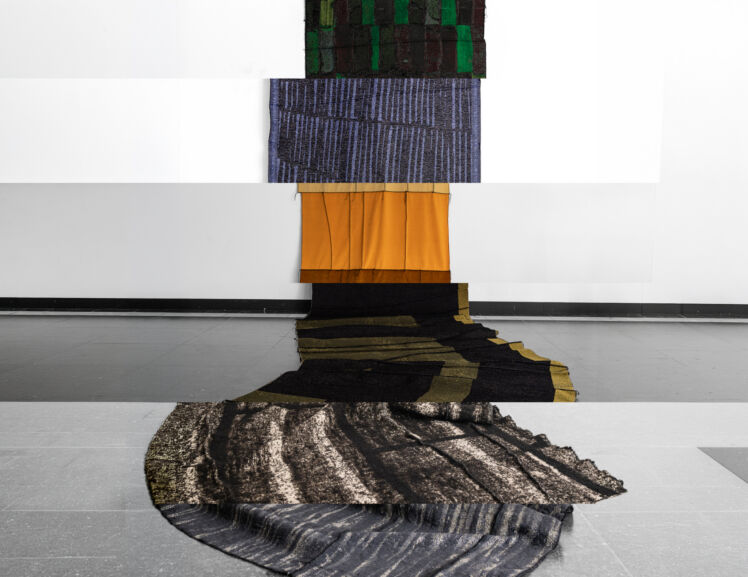
With Soft Infrastructure, Marte Van Acker investigates how textile can create, define, and transform
space. A clever mechanism keeps the surface in constant motion, resulting not in a fixed structure but in a flexible architecture that continually reorganizes itself. A light-footed take on the space of
tomorrow.
Jill Delobelle
Brugge Hergekaart
KU Leuven, Campus Sint-Lucas Gent, Master Interieurarchitectuur
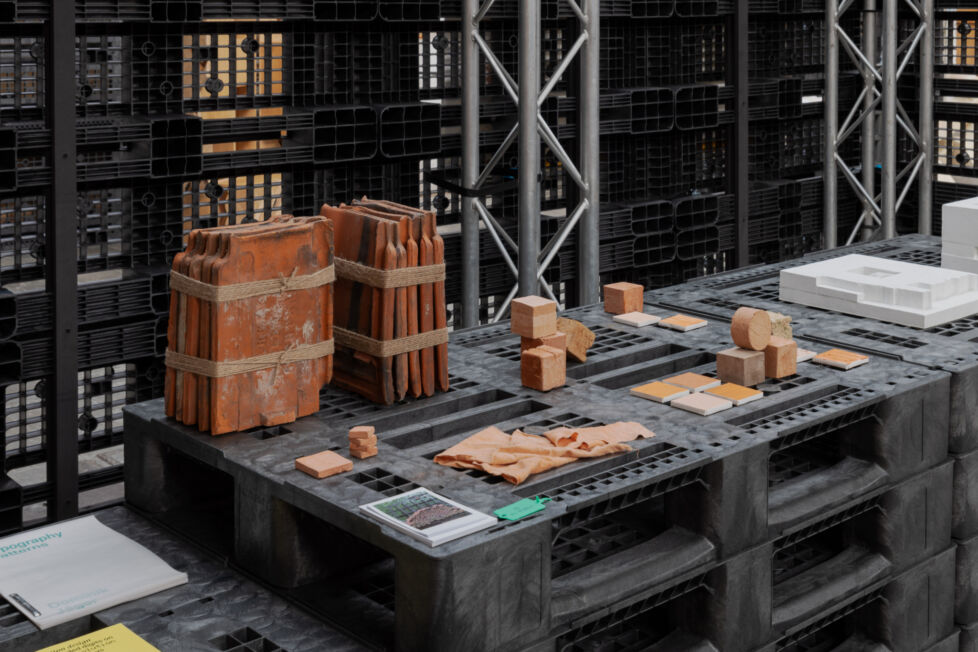
In a wonderfully fresh way, Jill Delobelle looks at vacant buildings as temporary material quarries full of hidden potential. By breaking, sieving, and reprocessing old roof tiles into paint, textile, or tiles, she gives familiar building material new life. A circular view on vacancy, in which not demolition, but possibility becomes tangible.
Dominik Jáger
Investigating motion design parameters for crowded digits on monochrome low-resolution
small-format OLED displays
Hogeschool PXL, Master Moving Type & Typography
Dominik Jáger investigates how motion design can make digits more legible on small low-resolution screens. Think of medical and industrial equipment, where you sometimes have only a fraction of a second to read information. With six typographic animations he tests how movement can help when digits are closely packed together. In doing so, he explores a new dimension of typography: not just how it looks, but also how it behaves.
Auke Dezeure
Handschrift 476
LUCA School of Arts, Master Beeldende Kunsten, Grafisch Ontwerp
Thousands of manuscripts lie hidden in archives. Auke Dezeure brings one back to life: a
late-medieval cookbook from the Ghent Book Tower. She translates the visual language of the
manuscript into a modern publication, without losing the character of the original. Not just the book, but also its stories and flavours are given a new audience.
Anastasiia Vasylenko
again, again, begin
Koninklijke Academie voor Schone Kunsten Antwerpen, Master Beeldende Kunsten, Graphic Design
A new beginning is never a blank page. In again, again, begin, Anastasiia Vasylenko brings the stories of Ukrainian refugees trying to build a new life. Folded, semi-transparent pages conceal personal photographs and images from war archives. When unfolded, they become visible, but never entirely: they remain beneath the paper. The past literally stays present beneath the surface, even when you begin again.
Gipeum Oh
How Long Will You Stay Here?
Koninklijke Academie voor Schone Kunsten Antwerpen, Bachelor Beeldende Kunsten, Graphic Design
34 times, that’s how often Gipeum Oh moved across different continents. She translated that search for a home into 35 fields of paper-cut grass blades, each one for a place where she has lived. Hidden among the grass are sentences from those places, discovered by searching and wandering. Two fans set the field in motion: the grass bends and rises just like a visual wave. Gipeum opens up the world of text and print into a spatial installation.
Ksusha Shostakovska
A MATERIAL STUDY OF SERIF AND UKRAINIAN TYPOGRAPHY
Koninklijke Academie voor Schone Kunsten Antwerpen, Graphic Design
The distinctive letterforms of Ukrainian typography take on a three-dimensional form. Ksusha
Shostakovska lifts letters off the page and turns them into spatial objects. Letters are not read, but
physically experienced. The distinctiveness of the Ukrainian alphabet literally takes up space and
becomes a bearer of history and identity.
Wouter Pollaris
Overquantified
Sint Lucas Antwerpen, Bachelor Graphic Design / Master in Visual Arts in a Digital Context
When does a lot really become a lot? Wouter Pollaris confronts us with that question in
Overquantified. What starts as a pretty basic graphic grid grows into 268,435,456 possible
combinations. An amount that even his computer struggles to process. This is a visual exploration of how we deal with numbers and quantities that far exceed our imagination.
Beñat Zubillaga Roa
LOTURA: Connecting Feelings Through Touch
Hogeschool West-Vlaanderen, Bachelor Industrieel Productontwerpen
LOTURA is a tactile tool that helps children make emotions and experiences tangible. Hand-sized
pieces in various shapes, textures, and weights invite touching, choosing, and combining. Children
create their own combinations, which then become a starting point for conversation. The modular
system made of sturdy ABS plastic makes LOTURA a reusable, accessible product for emotional
expression and reflection.
Kamila Shaha
NubiGo metered dose inhaler
Hogeschool West-Vlaanderen, Industrieel Productontwerpen
With NubiGo, Kamila Shaha redesigns the classic asthma inhaler with spacer for children aged five to ten. A more compact design and two ergonomic grips help small hands with use. Its playful shape and fresh colour take the inhaler out of the medical sphere. An inhaler you actually want to carry along, even at school or at the sports club.
Brent Vlerick
Allemaal poppenkast
KASK & Conservatorium, Mode
Brent Vlerick collects personal images of everyday moments and translates them into fashion.
Secondhand clothing, leftover fabrics, existing prints, and objects take on new meaning in a collection that stays in constant motion. Allemaal poppenkast is fashion as a way to slow down and find beauty in what already exists.
Fareed Aziz
Al-Sanad
Sint Lucas Antwerpen, Master Beeldende Kunsten
After two and a half months on Khayamiya Street in Cairo, Fareed Aziz lets the craft tell its own story in a spatial installation. Five hanging structures only form one image when viewed from the right angle. A video featuring the words of maker Mahmoud explores the threads that keep the craft alive, passed down from generation to generation.
Gust Huybens
NOMAD
Thomas More, Meubelontwerp
Nomad is a flexible seating landscape with cushions arranged around a central light source. It’s
reminiscent of a campfire: a place to sit, talk, lie down, or simply be together. Setting it up also
creates connection: a light frame that you assemble together, as with a tent. And it can then take on a different shape again and again. Built to-gather.
Milo Van Aelst
Fabiola
Thomas More, Meubelontwerp
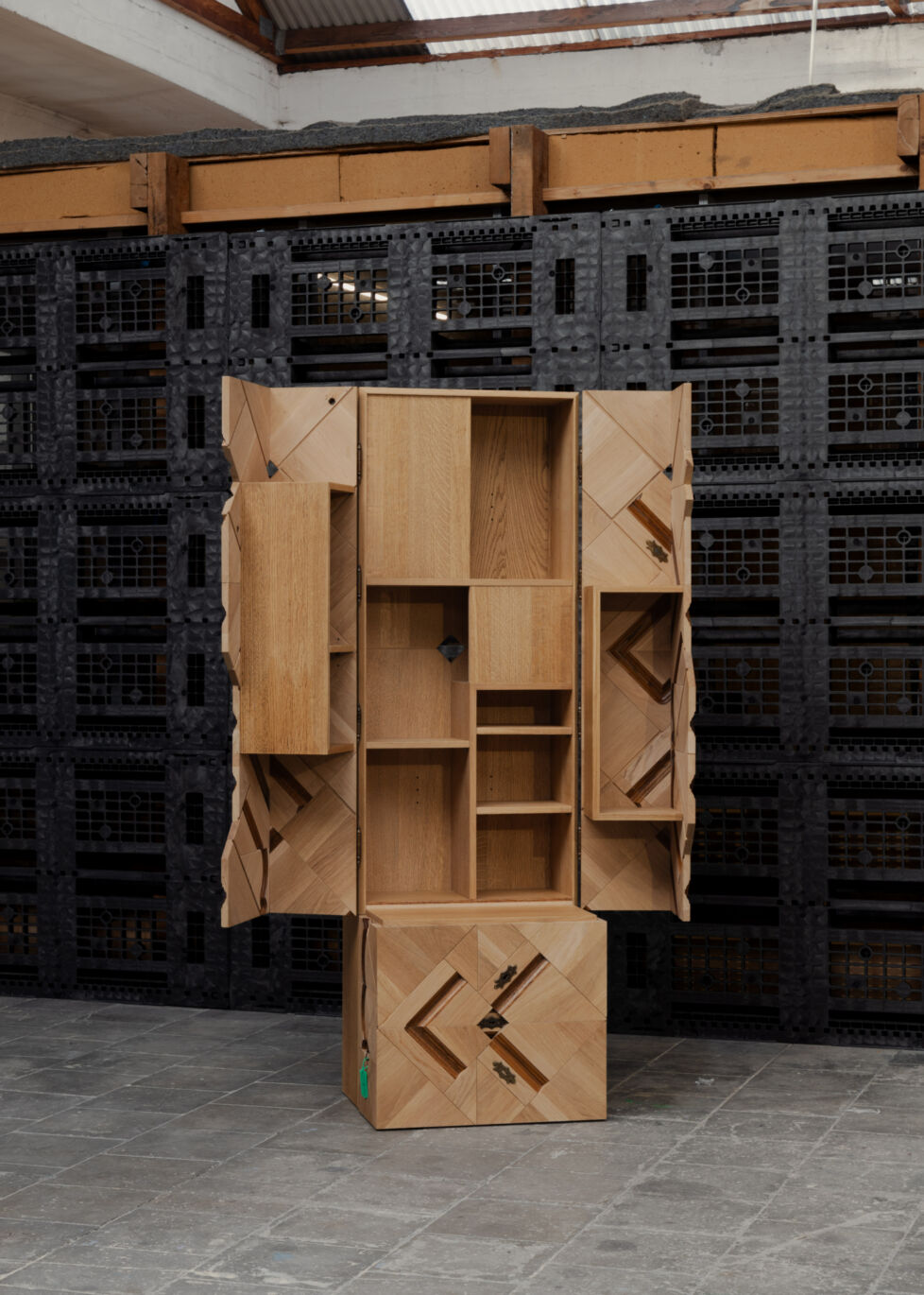
Fabiola is a design system that gives old furniture a new form and function. Milo Van Aelst goes
beyond reuse: the identity and character of the original cabinet form the starting point for a new
design. No two Fabiolas are alike, each carries its own material and history. The traditional wall
cabinet, translated into a modern form.


Lisa Declercq
Lisa is responsible for Designregio Kortrijk’s offline and online communications. She also coordinates the WONDER Festival alongside Stan. She is always on the lookout for the next big thing in young design talent and is therefore helping to build the organisation’s creative community.